
Nest and Sign Map
A diagram of every nest site, dropping cluster, and travel route found during inspection.
Mouse control in Corvallis, OR is a precision job — mice slip through gaps you would swear were sealed and nest inside walls, appliances, and pantries. We find the nests, trap the population, and close gaps down to the smallest openings.
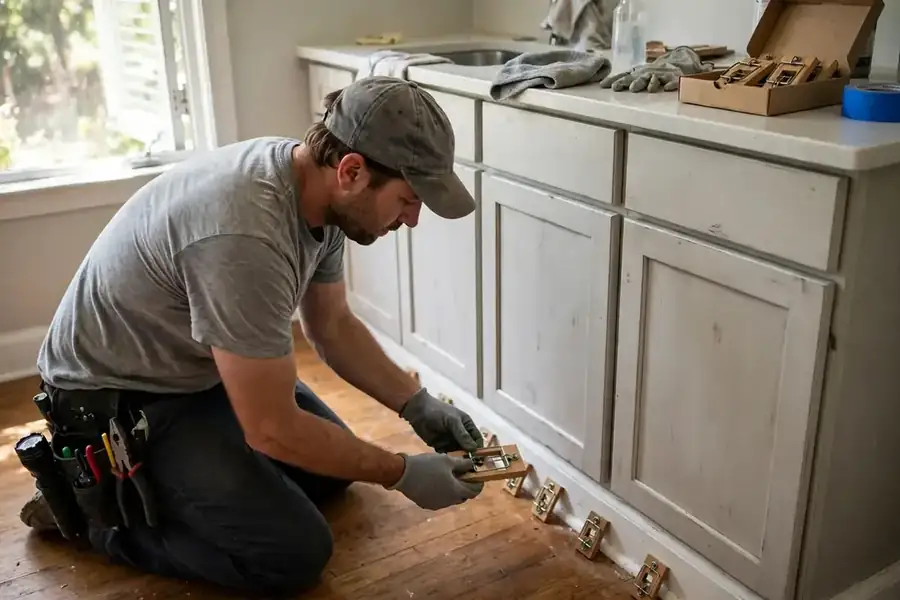
Mice are small, fast-breeding, and endlessly inventive — this service is engineered for exactly that.
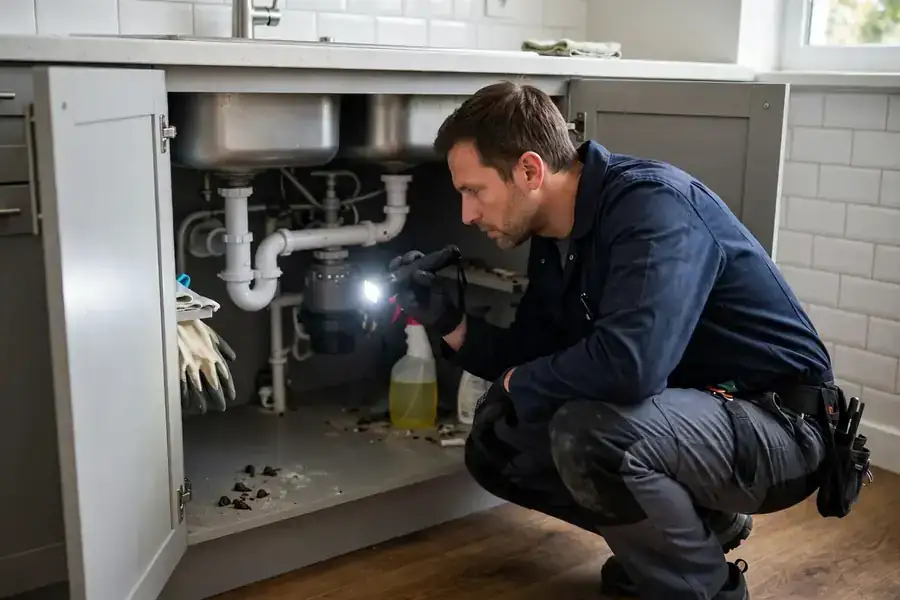

House mice live with you — in the pantry, behind the stove, inside the dishwasher insulation. Our home mouse work is built around kitchens and living spaces, with traps you will never see and methods that keep food areas safe.
Offices, retail stockrooms, and food businesses get mouse programs scaled to commercial spaces — discreet interior trapping, break-room sanitation plans, and the documentation your operation needs.
Mouse control and removal is the process of eliminating house mouse or deer mouse infestations from a building and sealing the small gaps they enter through. Because a mouse can squeeze through an opening far smaller than most people imagine, the inspection has to be forensic — and the sealing has to be meticulous.
Corvallis homes meet both species. House mice live alongside people year-round, nesting in kitchens, wall voids, and appliances. Deer mice prefer the edges — garages, sheds, woodpiles, and rural outbuildings — and move indoors when cold weather hits, which is why properties near fields and forest see them most. Both contaminate food and damage wiring; deer mice additionally call for careful handling because they can carry hantavirus.
With mice, the gap you miss is the job you redo — we find every one.
Small animal, thorough process — nothing about mice rewards shortcuts.

We map every dropping cluster, gnaw mark, and nesting site to locate nests and travel routes before a single trap goes out.
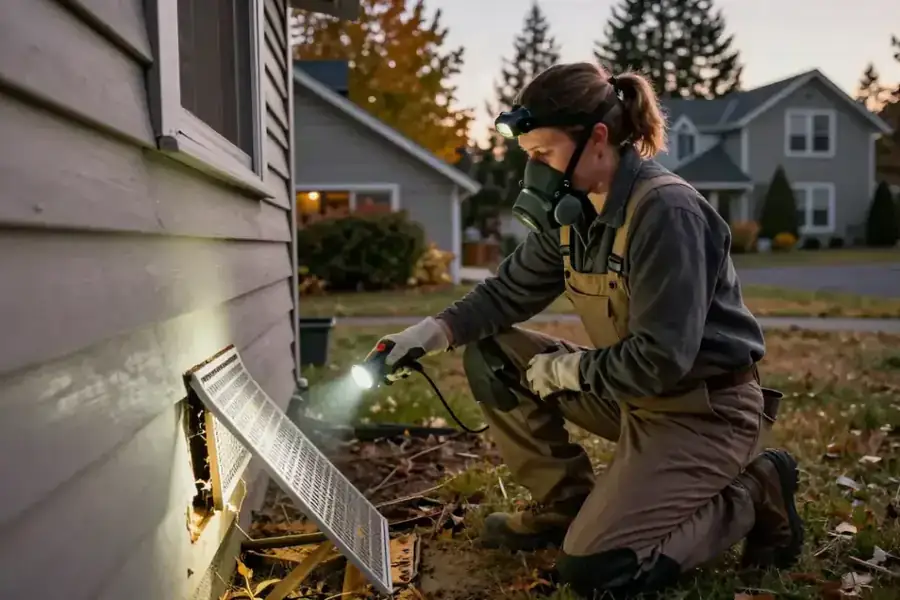
House mouse or deer mouse? Dropping size, nesting location, and habitat tell us — and deer mice trigger our enhanced handling protocol.
Dozens of small traps go along baseboards, behind appliances, and inside cabinets, checked and repositioned until captures stop completely.
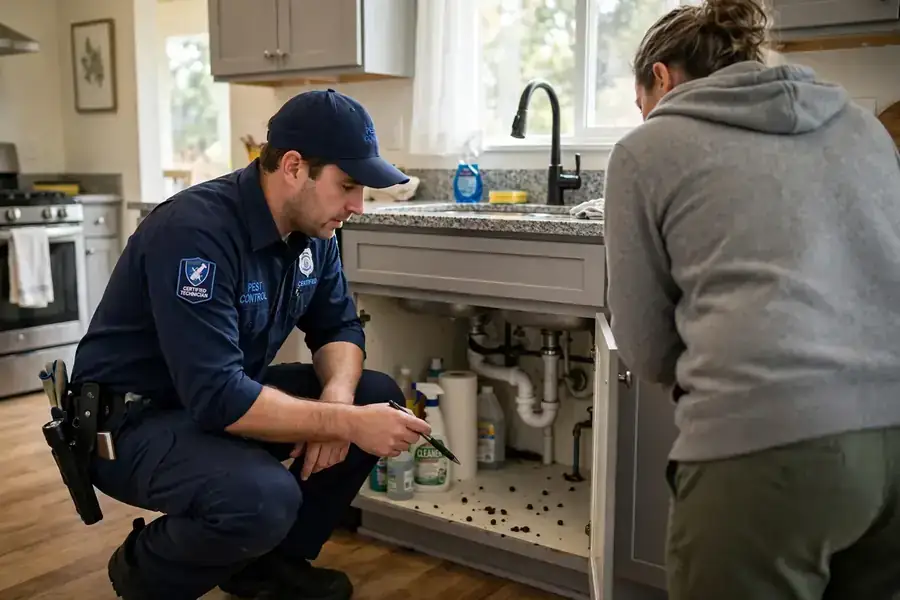
Every gap gets closed — pipe chases, cable entries, under-sink voids, dryer vents — with copper mesh and sealant sized for the smallest intruder.
We verify captures have stopped, remove all traps, and leave you with storage and sanitation habits that keep mice from re-establishing.
Sensitive, quick-kill traps calibrated for a mouse's light touch — placed in multiples along every active runway.
Discreet boxes that capture multiple mice without resetting, perfect for cabinets, pantries, and commercial back rooms.

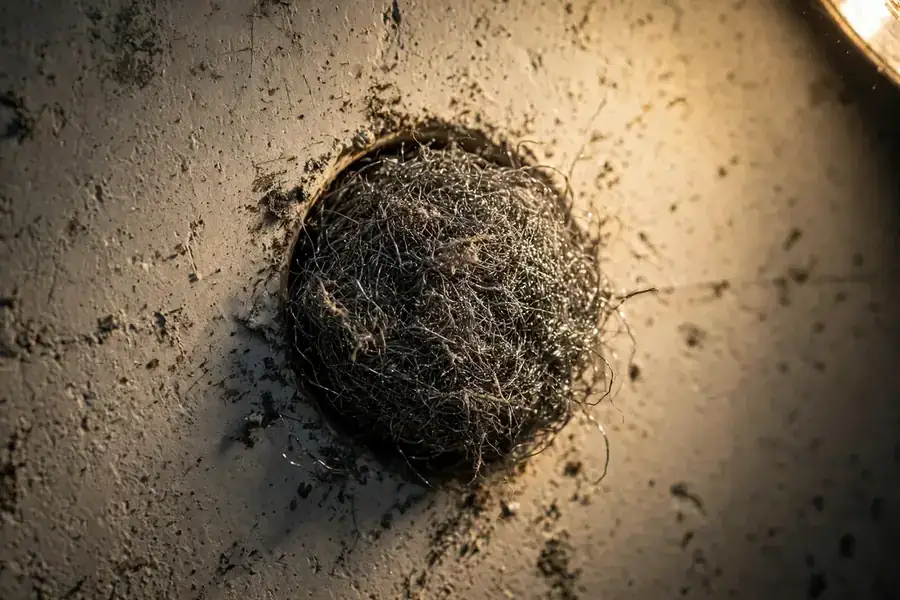
Soft copper wool packed into the smallest pipe and cable gaps — mice cannot chew it and it stays put in damp spaces.

Small-grid galvanized mesh over vents and weep holes that stops mice while preserving airflow.
Cut-to-fit metal plates that close the ragged openings around sink plumbing — a top mouse highway in most homes.
Fine brush seals on pantry and cabinet kick plates that block the gaps mice use to reach stored food.

Reveals mouse urine trails along baseboards and inside cabinets, mapping routes the eye cannot see.
Used during post-removal cleanup of droppings and nesting material, capturing fine particles instead of spreading them.
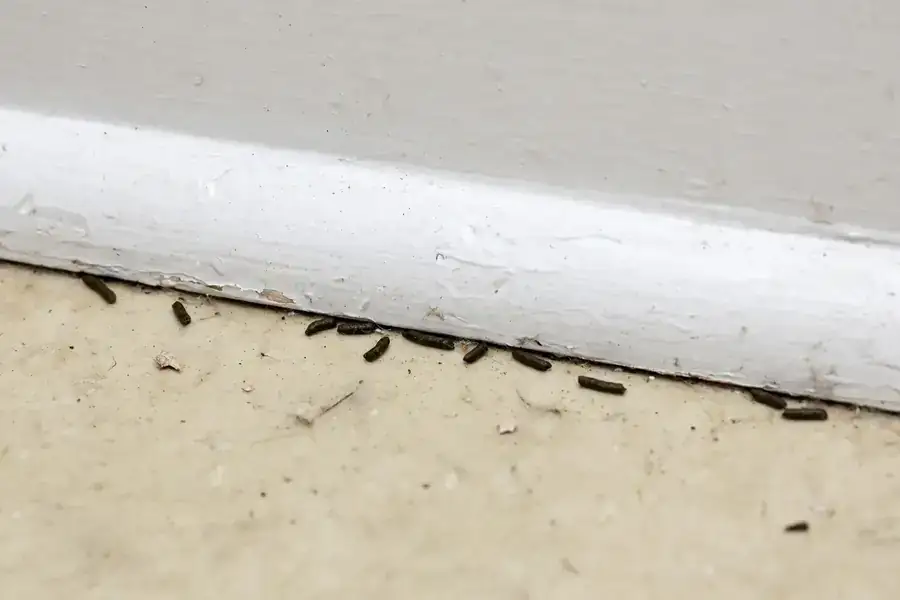
Tiny dark pellets in drawers or along counters mean mice are foraging where you eat. We trap the population, seal their kitchen entries, and guide you on safe cleanup.
Outbuildings are deer mouse territory, especially near fields and woods. We clear the population and seal the structure so they cannot graduate to your house.
Light, quick scratching in wall voids usually means nesting mice. We locate the nest wall, trap from both sides, and seal the voids they traveled.
Corvallis is mouse country — and we plan like it. Older homes around downtown and the campus have decades of small gaps around plumbing and wiring that house mice have used for generations. Properties on the town's edge, near farmland or forest, deal with deer mice pushing in from woodpiles and sheds each fall. And Corvallis's wet winters keep mice indoors for months once they are in, so we seal with materials that survive the damp — copper and galvanized metal, never just foam.
A renter found droppings in the silverware drawer and gnawed corners on cereal boxes in a College Hill duplex.
A trapping grid behind appliances and along baseboards cleared the population in under two weeks; we sealed the under-sink pipe gaps both units shared.
Prevention tip: transfer cereal, rice, and pet food into hard sealed containers — boxes are no barrier to mice.
A homeowner near wooded acreage found nesting material in stored camping gear and droppings across the workbench.
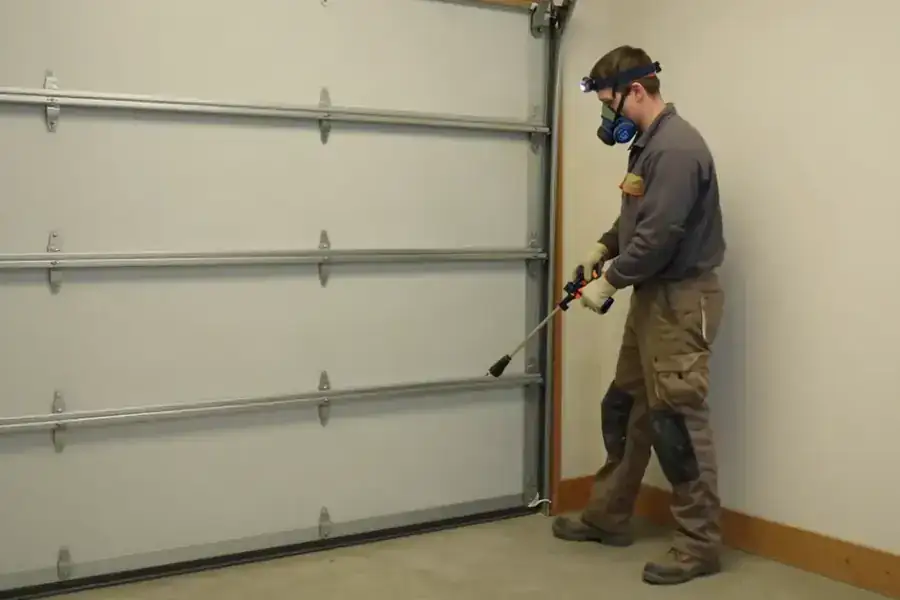
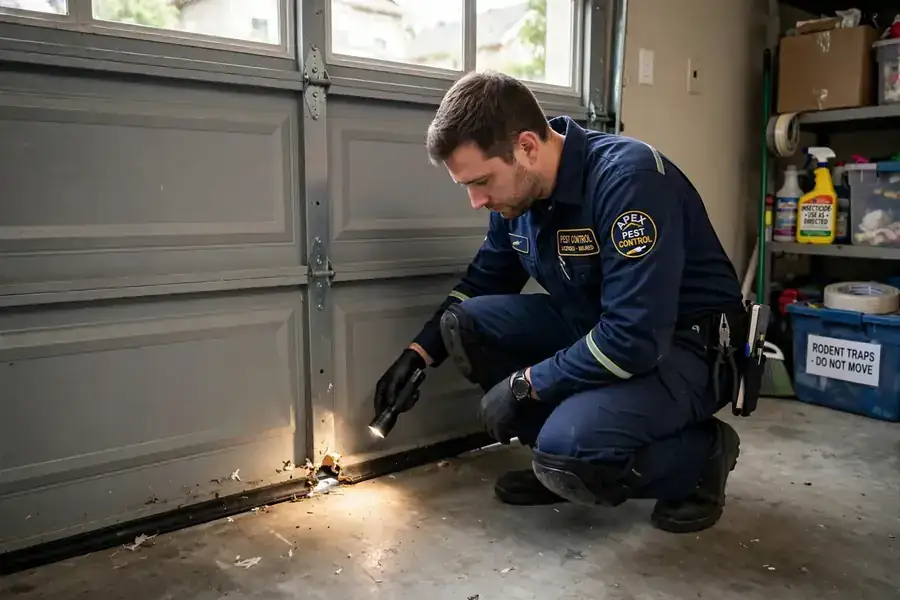
We trapped the garage population, applied our deer mouse handling protocol during cleanup, and sealed the garage door gaps and wall penetrations.
Prevention tip: never sweep or vacuum deer mouse droppings dry — dampen the area first and wear a mask, or call us to handle it.
Scratching inside the kitchen wall led to a nest in the dishwasher insulation, with droppings under the sink.
Traps on both sides of the wall cleared the nest in days; we fitted gap plates around the sink plumbing and sealed the dishwasher's utility entry.
Prevention tip: pull out the stove and dishwasher once a year — the gaps behind them are mouse highways.
Mice are small, but the problems they create are not.
A single mouse leaves droppings across counters, in drawers, and inside stored food as it forages nightly — spreading salmonella with every trip. Professional trapping removes the population, and kitchen-gap sealing keeps the next one from restocking the pantry.
Deer mice can carry hantavirus, which spreads through airborne particles from dried droppings and nesting material. Our enhanced protocol means droppings are never swept dry, cleanup uses HEPA filtration, and you will know exactly what is safe to handle yourself.
Mice nest inside wall voids, appliance insulation, and stored fabrics — shredding materials, staining with urine, and chewing nearby wiring. Finding every nest, not just the visible mice, is what ends the damage.
Trapping grids along every runway catch the shy nesters too — the ones a single trap in the corner always misses.
We seal the openings other services walk past: pipe chases, cable entries, kick-plate gaps. If a mouse could fit, it is closed.
Where deer mice are involved, cleanup follows hantavirus precautions as standard — not as an upsell.
Traps go behind and beneath, never across your counters. You keep cooking while we keep working.
Clear records you can keep and share.
A diagram of every nest site, dropping cluster, and travel route found during inspection.
Placement dates, locations, and capture results for the full trapping grid.
A list of every gap closed, with materials noted — your proof the job was thorough.
Mouse-specific facts that explain why this service exists.
Mice navigate by touch, hugging baseboards and wall edges — which is why traps work along walls and fail in the middle of rooms. Placement is the skill.
Mice reproduce quickly, so a few mice in October can be a full infestation by winter. Early trapping is always cheaper than late trapping.
Repellents and ultrasonic gadgets do not remove an established population. Trapping plus exclusion is the only approach with a track record.
If you're outside these neighborhoods, don't hesitate to reach out and ask. +14582640658
Most mouse jobs in Corvallis fall in the $180–$450 range, covering inspection, a full trapping grid, micro-gap sealing, and a follow-up check. Larger homes or jobs involving deer mouse cleanup protocols can run higher. We quote the complete price in writing before any traps go out, so there are no surprises.
Start by moving all dry goods into hard sealed containers and cleaning crumbs nightly — that removes the food reward. Then call us: we place a trapping grid behind appliances and along baseboards, seal the pipe and cable gaps mice use to enter, and verify captures stop. Most kitchen infestations clear within two weeks.
They deserve respect. Deer mice can carry hantavirus, which spreads when dried droppings or nesting material are disturbed and particles become airborne. Never sweep or vacuum deer mouse droppings dry — dampen the area, wear a mask and gloves, or let our crew handle cleanup under our enhanced protocol. The risk is manageable with the right precautions.
House mice live with people — smaller, gray-brown, nesting in kitchens, walls, and appliances year-round. Deer mice are slightly larger with white bellies and big eyes, preferring garages, sheds, and woodpiles, and moving indoors mainly in cold weather. We identify the species during inspection because deer mice trigger extra cleanup precautions.
Yes — a mouse can compress its body through an opening far smaller than its apparent size, which is why sealing has to be meticulous. We check pipe chases, cable entries, dryer vents, and kick-plate gaps with a mouse's-eye view, closing everything with copper mesh and sealant. The gaps you would never notice are usually the ones they are using.
Call (458) 264-0658 for mouse control in Corvallis, OR. We will map the nests, trap the population, and seal every gap — most kitchens clear in two weeks.
We invite you to reach out for any rodent control needs. Our team is available Monday through Friday, with quick response times to your inquiries.