Crawl space photo report
Dated before-and-after photos of every entry point, burrow, and repair.
Our crawl space rodent control service clears rats and mice from beneath Corvallis homes and fixes the conditions that invited them. We trap the rodents, repair torn vapor barriers and vent screens, and leave the space dry and sealed.
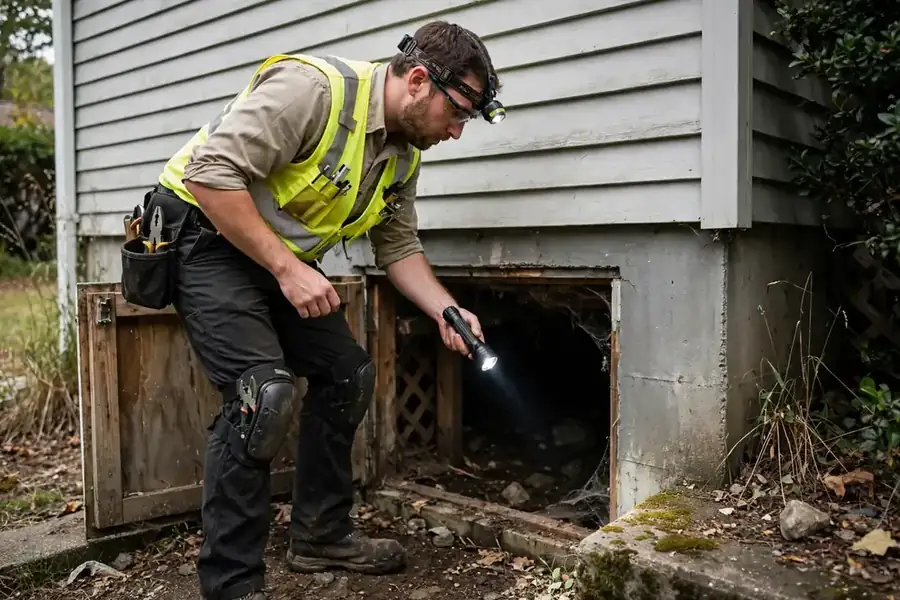
Crawl spaces need a different playbook than attics — low clearance, damp soil, and constant ground contact. Every job covers all four:
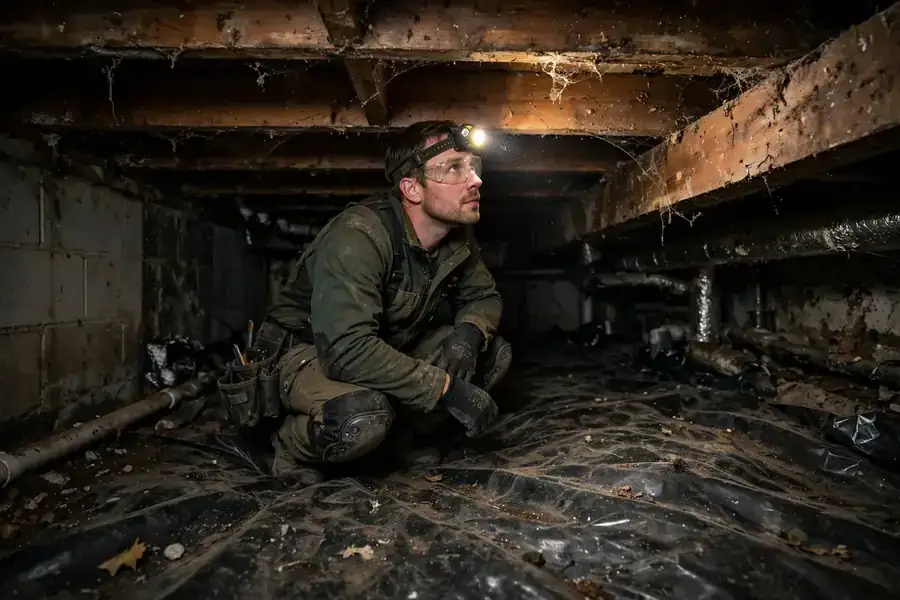

Most Corvallis homeowners never go under their house — which is exactly why rodents love it down there. We do the crawling for you, document what we find with photos, and hand the space back sealed and dry.
Strip malls, offices, and restaurants with crawl spaces face the same ground-level pressure — plus health inspectors who check under buildings. We work around business hours and provide the documentation inspectors ask for.
Crawl space rodent control removes rats and mice living under your home and repairs the damp, open conditions that drew them there. In the Willamette Valley, crawl spaces stay moist most of the year — and a wet, undisturbed space under a warm floor is ideal rodent habitat.
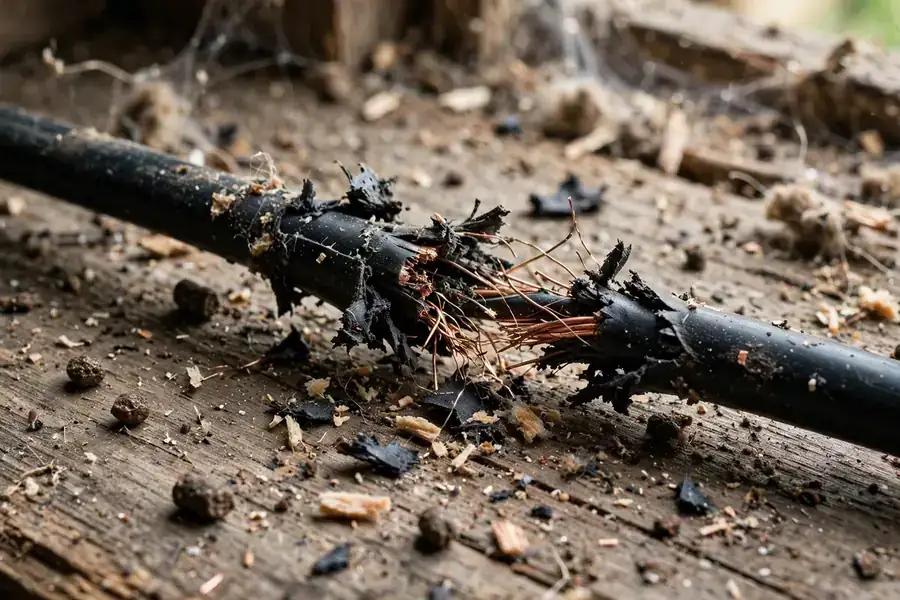
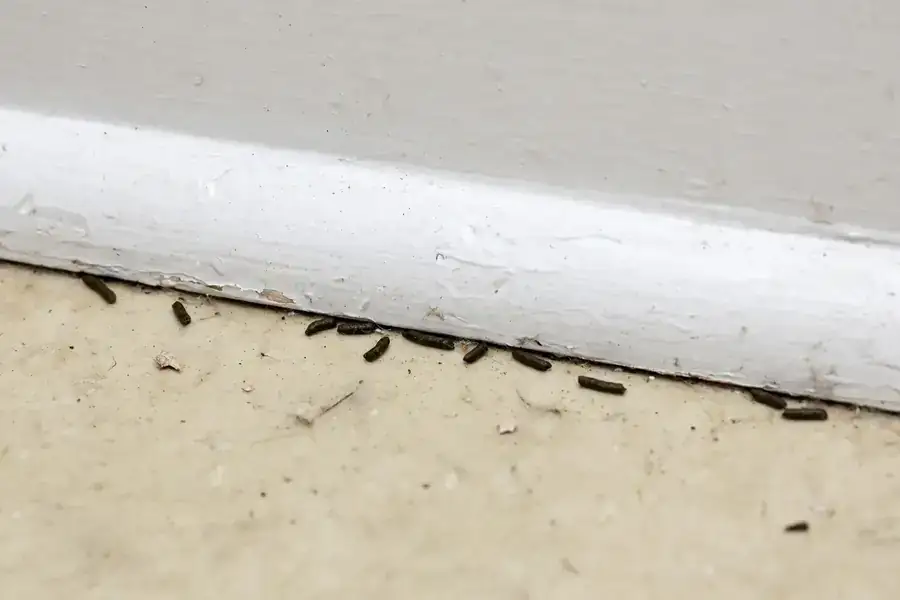
Norway rats burrow along foundation walls and chew through old vent screens, while deer mice slip through gaps you could barely see. They shred vapor barriers for nesting, foul subfloor insulation with droppings, and chew on plumbing and wiring in the dark. Because the damage hides under the house, most infestations are months old by the time anyone notices the smell.
What happens under the house doesn't stay under the house.
Crawl space work is slower and more physical than attic work — here is the sequence we follow.
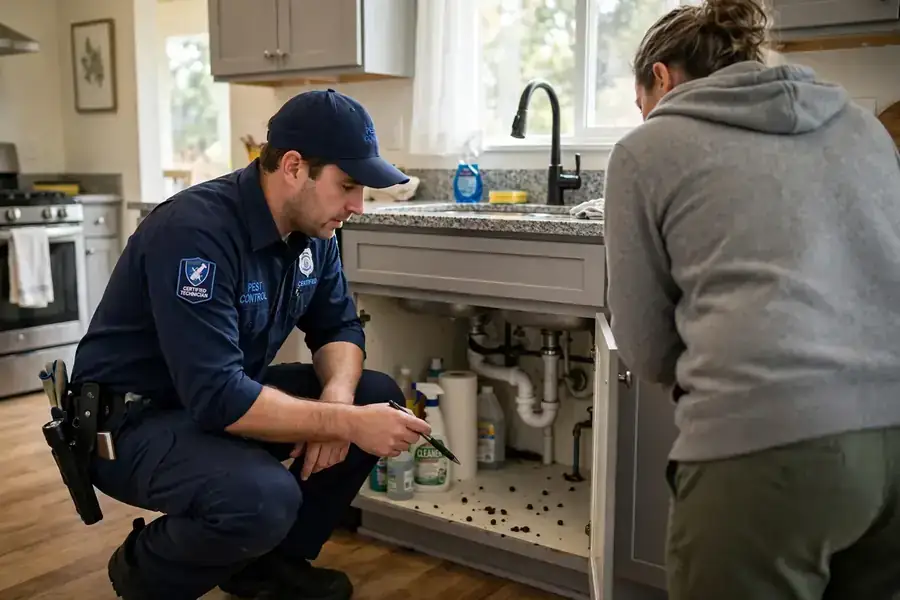
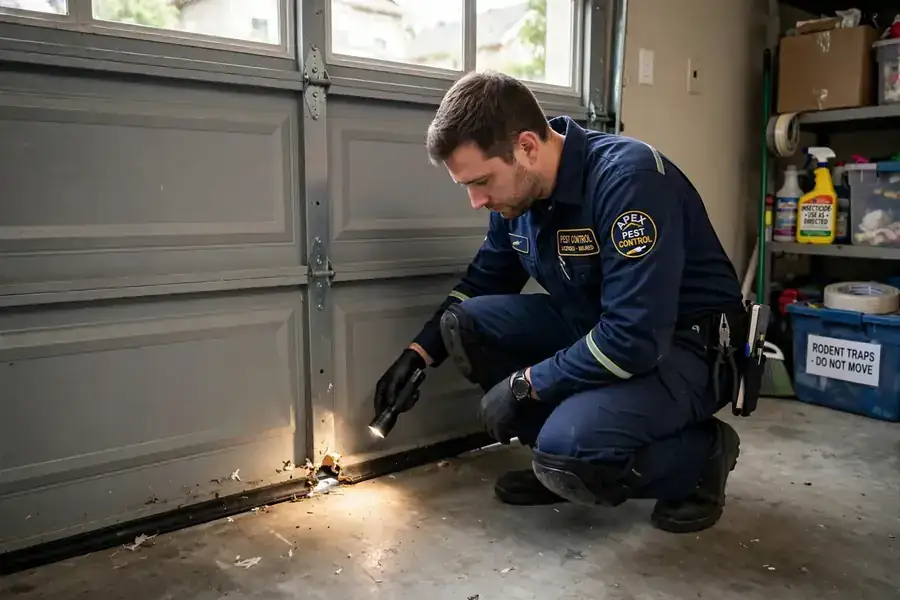
We crawl the full perimeter and interior, photographing entry gaps, burrows, damaged vapor barrier, and droppings trails. You get photos of a space you've probably never seen yourself.
We set traps against foundation walls and around piers where Norway rats patrol, keeping poison out from under the house where it could wash into soil or reach pets. Return visits clear and reset until activity ends.
We pull out shredded sheeting, nests, droppings, and fallen insulation, bagging everything for disposal before anything new goes down.
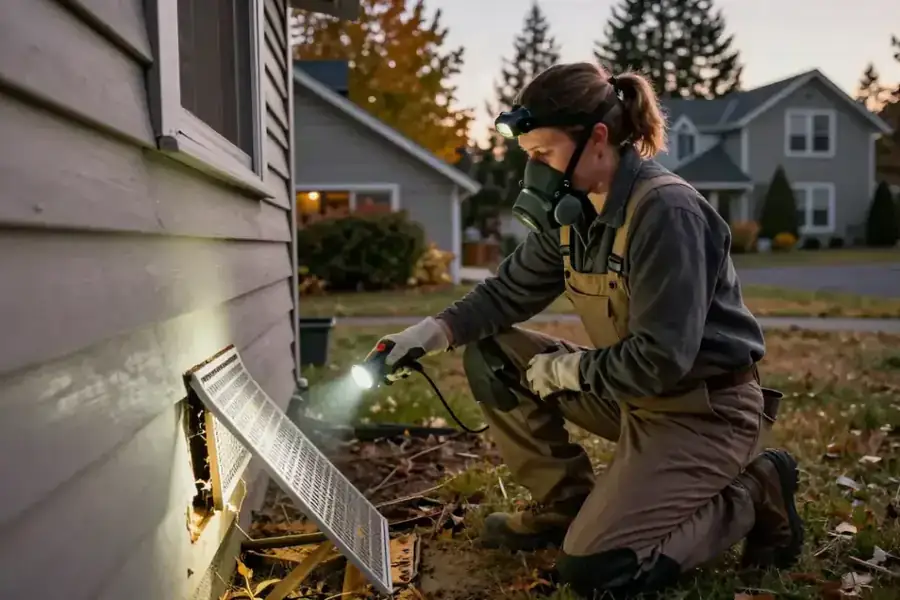
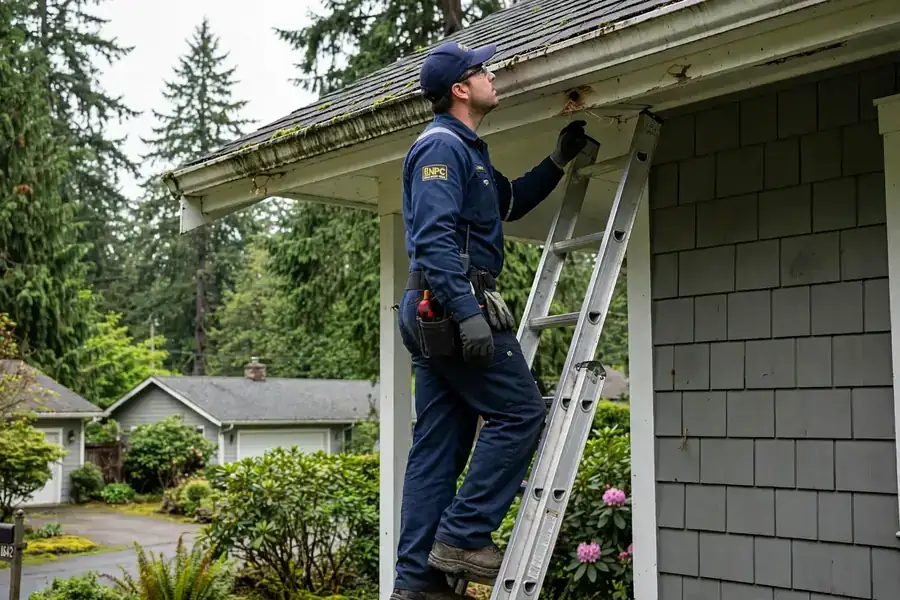
We fit galvanized screens over every foundation vent, rebuild the access door, and close pipe and conduit gaps with mortar and mesh.
We lay new vapor barrier, set monitor traps, and return to confirm the space is quiet. The job is done when the crawl space is clean, dry, and sealed.
Compact traps that fit in tight foundation runs where Norway rats travel; placed against walls, never in the open.
Locked stations placed outside the foundation to intercept rats before they reach the vents — never loose poison under the house.
New vapor barrier laid wall-to-wall over the crawl floor, lapped and sealed to cut ground moisture.
Rust-proof mesh cut to fit foundation vents and access openings; rats can't chew through it and it survives valley humidity.
Closes gaps where pipes and conduits pass through the foundation — the entry points caulk alone won't hold.
Light every dark corner of an 18-inch crawl so nothing — burrows, nests, chewed lines — gets missed.
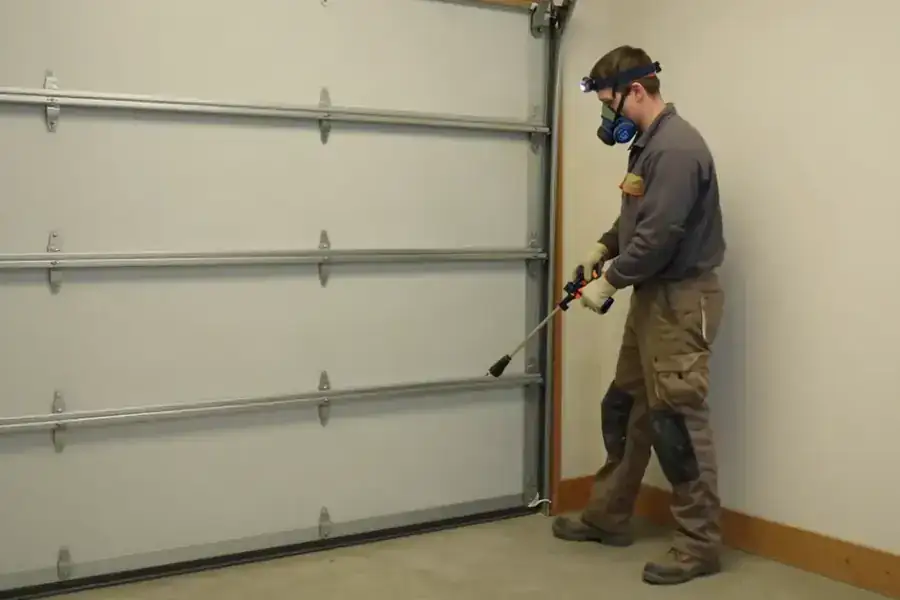
Crawl space air carries dust, mold, and droppings particles; we suit up for every entry.
Wire stays and mesh that hold replacement batts tight to the subfloor so rodents can't nest behind sagging insulation.
Odor from below travels up through gaps around plumbing and ducts. We find the source under the house, remove it, and seal the air paths.
Scurrying beneath the floorboards means active rodents, often Norway rats. We trap the foundation perimeter and close their entries.
A missing screen or a warped access door is a standing invitation. We rebuild the barriers and check whether anything already moved in.
Corvallis crawl spaces are a product of the valley: high water tables, winter rain that never quite stops, and older foundations built before modern vent standards. Many homes near the Willamette and Marys rivers sit on ground that stays damp into June, and a damp crawl space draws both rodents and the moisture that ruins wood. We plan every job for valley conditions — drainage-aware barrier work, rust-proof materials, and sealing that holds through flood-season humidity.
The owner smelled something foul through the floor registers every time the furnace ran, and the crawl space hadn't been entered in a decade.
We removed a Norway rat colony, replaced the shredded vapor barrier across the floor, and rescreened every vent.
A working vapor barrier cuts both moisture and rodent appeal.
Deer mice were nesting in fallen subfloor insulation on the downhill side, where the foundation sat exposed to grade.
Trapped and cleared, insulation re-secured, and the exposed grade sealed with mesh and mortar.
Walk your foundation line each fall — gaps show up after wet winters.
Tenants complained of scratching under the floors; the landlord found a vent screen kicked in at the back.
Space cleared, access door rebuilt with a locking panel, and vents fitted with galvanized screens.
Locking access doors keep out both rodents and curious hands.
Under-house rodents damage what you can't see — until the repair bill arrives.
Rats tear plastic sheeting into nesting strips, letting ground moisture rise into joists and subflooring. We replace the barrier and stop the damp cycle that rots wood and feeds mold.
Mice and rats nest in the batts between your joists, compressing them and soaking them with urine. Heating costs rise while floors stay cold; we remove the ruined sections and secure fresh insulation tight.
Norway rats gnaw PEX lines, Romex, and low-voltage cable in the dark. We remove the rodents and flag every chewed run for your plumber or electrician before a leak or short finds you first.
Trapping runs until monitor traps sit quiet — not until we feel like stopping. You get the log to prove it.
New vapor barrier and sealed vents cut the damp air that rots joists and invites the next colony.
Intact, properly secured subfloor insulation keeps heat in the house instead of leaking into the dirt below.
Photos, sealing lists, and trapping logs give you paperwork that holds up at sale or inspection time.
Clear records you can keep and share.
Dated before-and-after photos of every entry point, burrow, and repair.
A written record of trap placements, visits, and every animal removed.
Every vent, gap, and barrier section we repaired, with materials noted.
Three things that surprise Corvallis homeowners about crawl space jobs.
Low clearance and damp ground slow every step, so most crawl jobs run two to four weeks. The extra time is the work, not a delay.
Fixing the rats without fixing the damp just invites the next colony. Barrier and vent work is part of rodent control, not an upsell.
Ask any company to show you dated photos from under your own house. If they can't, they didn't do the crawl.
If you're outside these neighborhoods, don't hesitate to reach out and ask. +14582640658
Typical crawl space jobs run $180–$450, with most landing mid-range once trapping and vent repairs are included. Full vapor barrier replacement or extensive sealing adds to that, and we'll price it line by line after the under-house inspection. You approve the number before we start.
Smells through floor vents, scratching under the floorboards at night, and unexplained spikes in heating bills are the classic signs. The surest check is a photo inspection — we crawl it with cameras and show you exactly what's living down there.
Yes, when rodents have shredded it — and they usually have. We remove the ruined sheeting, clear the debris, and lay new 6-mil poly sealed at the seams. An intact barrier is one of the best long-term rodent deterrents a crawl space can have.
Most crawl spaces here go quiet within two to four weeks of trapping, then we seal and verify. Damp ground and low clearance make this slower than attic work, but the monitor-trap confirmation is the same: no activity, no closure.
Yes — air moves upward from the crawl space into living areas through gaps around pipes and ducts, carrying dust, mold, and droppings particles with it. Clearing the rodents and sealing those paths makes a measurable difference in what your family breathes.
Smell something under the floor? Call Corvallis Rodent Shield at +14582640658 — we'll crawl the space, photograph everything, and give you a written plan.
We invite you to reach out for any rodent control needs. Our team is available Monday through Friday, with quick response times to your inquiries.